Marketing however understood and practiced today is not the same as it was some time ago
when the means of advertising a product to the targeted consumers was possibly simpler. In this
case, there are two dominant terms that are often deliberated in this field: Digital marketing and
Inbound marketing. Separating and understanding digital marketing with an aim of identifying
the ways of applying it will help different organizations obtain the best marketing outcomes that
they would have wished for.
How to Implement Digital Marketing?
Digital marketing is defined as placing a product through different techniques or plans and is
accessible through the use of technology. Here are the essential steps to implement a successful
digital marketing strategy:
1. Define Your Goals:
The first step in creating a marketing plan is defining achievable and precise goals. As there can
be aims of branding, website visits, leads or direct sales, it is easier to come up with certain
campaigns if, for example, there are clear goals. These goals should be SMART.
2. Identify Your Target Audience:
Analysis of the target group of users is very basic when conveying information on the internet.
In this regard, ensure that you undertake an analysis of your probable clients, what they are
interested in, what they engage in, and all the other factors which you presume would be relevant
to their operations. The information that can be found with the help of Google Analytics,
analytical data of social networks, or clients’ opinions may be effective to sort the audience.
3. Build Your Online Presence:
Building a good image on the internet is a requirement for internet marketing. This involves;
creating a corporate and easily navigable website for the company that is also blueprint to catch
search engine results and posting the links on suitable social sites. Ensure that the site you have
developed for the portable devices has been optimized and endowed with high usability.
4. Content Marketing:
The four primary divisions of digital marketing are SEO, SMM, content, and PPA and content is
the central module of digital marketing. Swamp your business with blog posts, articles, videos,
info graphics, and other kinds of the content which might be helpful for the target audience. The
business-related articles are informative and engaging for the site’s visitors, thus, allowing the
company to establish itself as an expert of the specific market.
5. Social Media Marketing:
As a strategy, you need to use the social networking sites whereby you can get to your intended
public and pass content with an aim of selling your products and services. It is rather specific in
the case of each platform in terms of the characteristics of the platform and the population who is
using it. Comment on posts, respond to comments and questions on your posts engage you with
customers on the social media platform.

6. Email Marketing:
Email marketing can consequently be described as one of the most efficient ways of dealing
with leads as well as improving the relation with the customers. It should be observed that an
email list should be established and owned and the list should be used to send newsletters,
promotional mails and other relevant information’s to its members. Do not overcrowd your
emails and do not create such position that they would not look pleasant when opened by the
reader through a mobile device, and on the top of the priorities, make sure that you provide the
receiver with value in the particular e-mail.
7. Pay-Per-Click (PPC) Advertising:
Marketing with the help of paid posts in social networks and Google is also effective as this is
aimed at a large number of clients at once. Design stimulating adverts that would interest the
appropriate audience and read the headline and text. Campaign should be tracking and
scheduling for optimization in such a way that it should have a favorable ROI.
8. SEO (Search Engine Optimization):
This is true since optimization is a key factor in the contemporary world if one wants their
website to be ranked by the search engines. Design proper website title tags, descriptions,
headers and all other contents of your web page. Build good quality backlinks and ensure that the
SEO technique of the website you are using is the latest. Remember to refresh the content from
time to time to keep it relevant to the consumer for the business’s intents.

9. Continuous Improvement:
Thus, digital marketing is habitual in terms of processes and plans implemented by actors. New
messages have to be tried, responses to these have to be sought and there must be shifts each
time a new market pattern is noticed. It means that current advanced trends and the available
technologies should be followed in a bid to make the marketing strategies work.
Digital Marketing VS Inbound Marketing:
Meanwhile, Inbound Marketing is closely related to, but should not be confused with, Digital
Marketing . When it comes to Digital Marketing and Inbound Marketing, these two are similar
but they are in fact, different. Here’s a detailed look at the differences between the two:
Digital Marketing:
Digital marketing is also referred to as web marketing and is the systematic application of media
for marketing communications and the delivery of goods and services through computer
technologies. SEO includes many processes, for instance, search engine optimization, content
marketing, social media marketing, email marketing, pay per click advertising, and many others.
As it has been noted above, digital marketing is an activity, which is aimed at achieving such
objectives as the information delivery to the biggest number of people using one or several
digital mediums as the appeal to these people and acquisition of these people as customers.
Key Components of Digital Marketing: Thus, the general manager needs to focus
on the choice of people and their attitude to cooperation within a team. Following are the key
components of Digital Marketing:
- SEO (Search Engine Optimization): Enhancing the websites ranking on to the
search engines.
- Content Marketing: Creating contents relevant and resourceful that can attract the
audience that company deem fit for its products.
- Social Media Marketing: Utilizing all the social media site to post products and
interacting with the customers.
- Email Marketing: For opening up the leads and ensure that the firm keeps on closely
communicating with the clients and other customers through mail.
- PPC Advertising: Through the paying for the ads in the search engines as well as the
social media platforms.
- Affiliate Marketing: On sales and earnings of commissions through its products being
distributed through affiliates.
- Influencer Marketing: So, arranging with these people to request audiences from the
social media pages of this station.
Inbound Marketing:
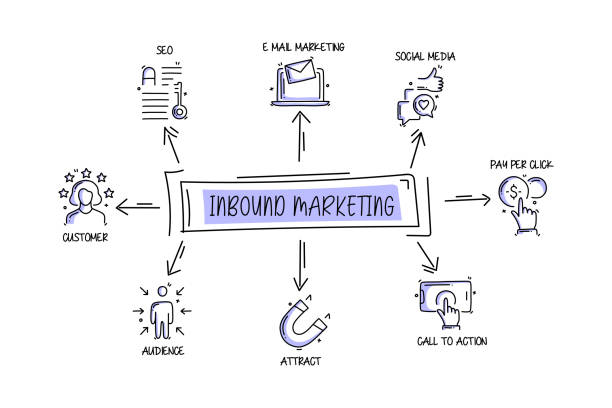
However, inbound marketing is a specific technique that can be traced to digital marketing. The
first of these is customers, it aims to get the customers’ attention, offering the customers useful
content and relevant experiences. The idea therefore is to build trust and credibility right from
the door of the target population in order to entice them to patronize.
Inbound Marketing Tactics:
Blogging: Preparing articles for the blogs that will comprise of material that the target
group may find useful.
Content Offers: Offer the customer an eBook/whitepaper/Webinar and all such
materials in exchange for their contact information.
Email Workflows: Specifically, it applies e-mail marketing for sending a series of
messages automatically to the target audience interested in this service.
Social Media Engagement: Participating in the comment section of the related
hashtags and sharing the content that will posts.
Conclusion:
Web marketing and inbound marketing are the key to success in today’s world for any
organization that has a goal not only to exist but to thrive in the existing conditions of the
Internet. Digital marketing encompasses any kind of marketing that is likely to be done within
the internet while Inbound marketing can be regarded as a strategic marketing tool of attracting
customers through the provision of useful content. The main tasks in the field of digital
marketing include the determination of goals, the identification of the target group, creating an
online presence, content creation, Social media, e-mail marketing, Pay-Per-Click (PPC), Search
Engine Optimization (SEO), evaluation and adaption. Therefore, if companies try to differentiate
between digital marketing and inbound marketing and ensure that the attention of the target
market is attracted, that will be useful to meet approaches of digital marketing world.